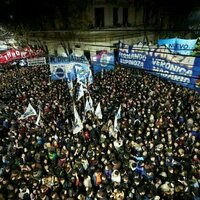


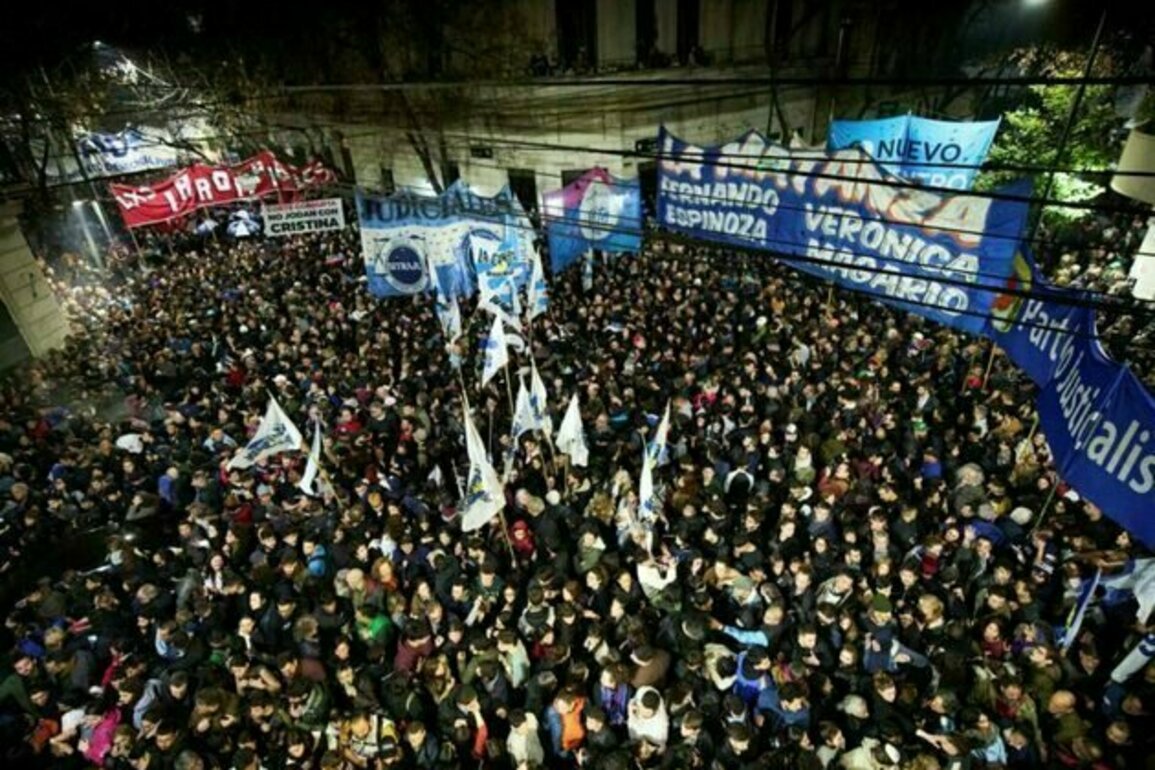
BUENOS AIRES (CN) - Hundreds of supporters chanted and waved banners outside former Argentinian President Cristina Fernandez de Kirchner's apartment Tuesday evening, after the nation's Supreme Court upheld her six-year prison sentence and permanent disqualification from public office.
The court affirmed her December 2022 conviction in the high-profile "Vialidad" corruption case. The case, involving fraudulent administration of public funds, has shaped political discourse for over a decade and deepened fault lines across the country's political spectrum.
Kirchner, 72, had appealed a lower court ruling that found her guilty of directing inflated public works contracts to a businessman closely linked to her family during her presidency. The Supreme Court dismissed the appeal, stating that the sentence was supported by evidence and free from constitutional violations.
Following the decision, Kirchner requested to serve her sentence under house arrest, a legal option for Argentines over age 70.
After speaking at her party's headquarters in downtown Buenos Aires, Kirchner returned to her apartment in the Recoleta neighborhood with supporters in tow.
Maria Sol Godoy, 28, an employee of the Buenos Aires City government, was one of them. "Those of us who never had anything will always be grateful to her," she said, recalling her childhood in the early 2000s, during a critical period in Argentina's economy. "We have to be here, supporting her."
Godoy, like many of those who gathered outside Kirchner's home, saw the court ruling as a political maneuver aimed at removing the former president from the electoral arena. She had recently announced plans to run in the provincial legislature elections scheduled for September.
"I don't think that one power should be able to decide over the other," Godoy said. "The people, not the judiciary, should choose the candidates."
Kirchner said during her remarks Tuesday night, "This ruling comes with a wonderful electoral schedule. Exactly a month before I could register my candidacy in the Buenos Aires legislature."
The ruling effectively blocks any attempt by Kirchner to return to public office. It comes just weeks ahead of the July 19 deadline to register candidacies for the upcoming elections. Her legal team maintains the case is politically motivated, accusing Argentina's judicial establishment of bias and undue haste. Legal observers noted the unusual speed at which the court issued its ruling - an anomaly in a judicial system often marked by prolonged delays.
The "Vialidad" case originated in 2008 with an investigation initially targeting Nestor Kirchner, Cristina Kirchner's late husband and also a former president.
Prosecutors said that during her two presidential terms, public infrastructure contracts in Santa Cruz province - Kirchner's political stronghold - were funneled to businessman Lazaro Baez through a system of overpricing and favoritism.
An investigative judge concluded that 85% of road contracts in the province had gone to Baez. The trial ran from 2019 to 2022, with prosecutors originally requesting a 12-year prison term.
The conviction has inflamed political tensions. With the 2022 ruling, vigils and demonstrations of support formed outside Kirchner's apartment. On Sept. 1 of that year, a man approached her at close range and aimed a loaded handgun at her head. Though the gun misfired and no bullets were discharged, the incident shocked the country and evoked memories of Argentina's violent political past - largely dormant since the return to democracy in 1983.
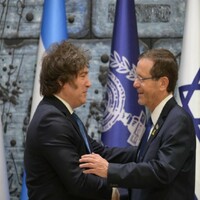
Only months after the attempted assassination, far-right libertarian candidate Javier Milei won Argentina's presidency, defeating the ruling Peronist coalition in a wave of anti-establishment sentiment.
Kirchner has continued to denounce the judiciary's ties to the political opposition, particularly former President Mauricio Macri, who governed from 2015 to 2019 and endorsed Milei's candidacy. She accused judges involved in her trial of being aligned with Macri's circle, though those challenges did not prevent the sentence from being finalized.

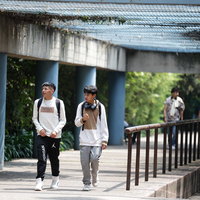
Political backlash to the Supreme Court decision has come from a wide range of groups. Center and left-wing parties condemned the ruling as unjust and politically targeted. Several public universities, including the University of Buenos Aires, announced occupations and assemblies - classic forms of student protest in Argentina's activist tradition.
Lourdes Oliverio, a member of the student union at the Faculty of Social Sciences at UBA, said that the sentence resonated even with those critical of Kirchner's administration. "I wasn't a supporter of her government, I consider myself more left-leaning," she said. "But we're seeing a serious anti-democratic move here: If this happens to a president, what's left for the rest of us?"
"There's a need, almost urgent, to meet in our faculties," Oliverio said, explaining the reasoning behind the university building occupations. "To hold assemblies and debate what to do in this situation."
Although some unions had claimed they'd call for a general strike, no statements have been released so far. Although scattered demonstrations took place across Buenos Aires and other major cities on Tuesday night, no major rally was planned for the coming days.
Many are waiting to see whether Kirchner's request for house arrest is granted. She has a limited window of around a week to turn herself in before police enforcement may follow.
Her legal team has vowed to take the case to international courts, arguing that her rights to a fair trial and political participation were violated.
For now, the two-time president remains at her home in Constitucion, south of Buenos Aires, as supporters expect her to lead the way on what may come next.
Source: Courthouse News Service