

Tim Pires Alves
Download PDF
Jun 22 2025
1
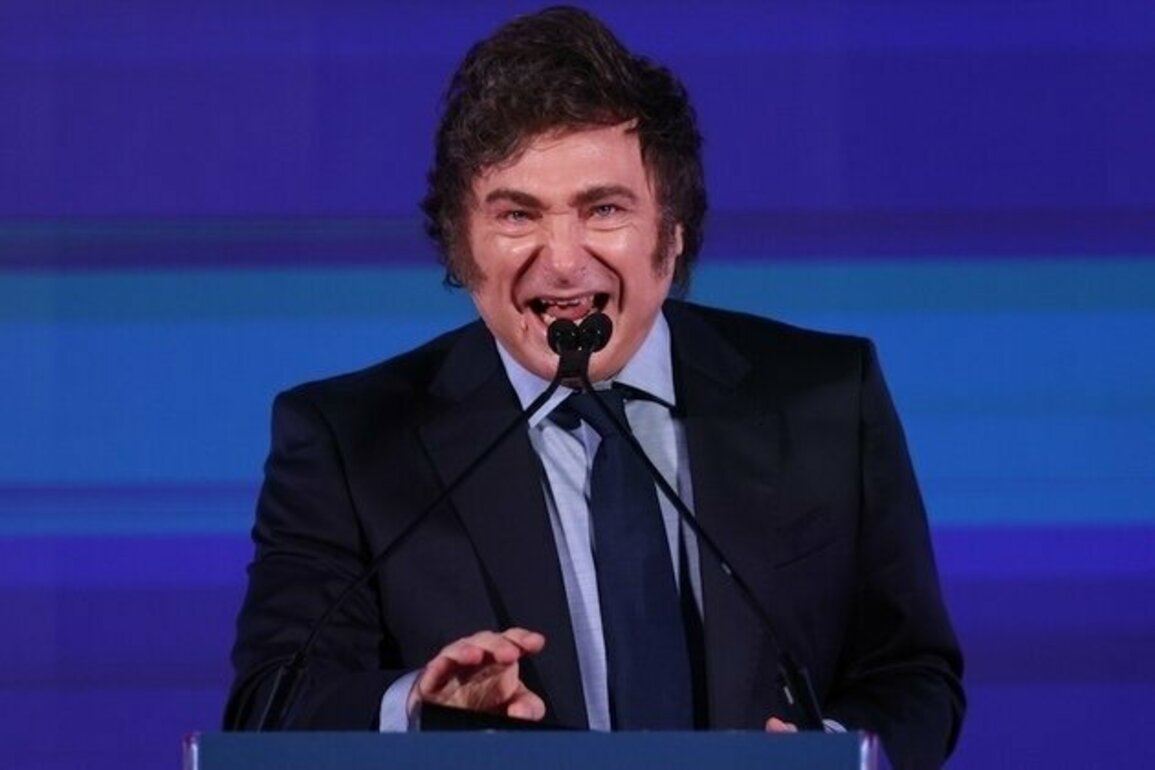
viewsm.iacobucci.tiscali.it/DepositphotosIn 2024, Argentina was in the international spotlight like it hadnt been in a long time, first because of its high yearly inflationof nearly 300 percent, and second because of its new polarizing president, ultra-liberal and chainsaw-wielding economistJavier Milei, who has faced the economic crisis with a shock therapy that included a structural dismantling of the state apparatus to radically cut public costs and fight bureaucratic inefficiency. As a result, his cabinet now consists ofnine ministries(including the Cabinet Chief), compared to 19 under his predecessor Alberto Fernndez. This form of streamlining the government, and thus the general state corset, is a politically (and economically) controversial strategy, but from the perspective of democratic theory, it is not inherently problematic. Because in reducing the size of the executive branch and its subordinate agencies, the president is essentially acting within his constitutional authority.
Nevertheless, many scholarsfear for democratic stability in Argentinathese days, not primarily because Mileihas cut 35.000 public sector jobslast year, but because his radical reforms seem to be permeating the separation of powers, creating a horizontal imbalance of political power. In particular, they point to Mileis dubious approach of bypassing Congress to implement his economic policy, as well as his authoritarian rhetoric, including populist attacks on corrupt political elites during his election campaign. All this is reminiscent of an old Argentine specter: so-called delegative democracy, in which a dysfunctional presidential democracy in times of (economic) struggles is tailored to a powerful charismatic leader who evades control by the legislature and the judiciary. And indeed, illegitimate executive dominance, or what is sometimes called super-presidentialism, as a result of a misinterpreted delegation of political power seems to be in the DNA of Argentine electoral democracy, which is why forGuillermo ODonnell, the intellectual father of delegative democracy, Argentina has always served as a prime example of his 1994 concept. But what is the empirical evidence when it comes to todays Argentina, precisely 20 years later? Is Javier Milei, however extreme his political agenda may be, really causing a re-delegativation of democracy?
Remarkably, and for a pragmatic reason, we have not been able to reliably assess the extent to which Mileis presidency, now more than a year old, has really damaged the institutional balance of power. Milei took office on December 10, 2023, and recent quantitative data on democratic quality (in Argentina and everywhere else) obviously refer to the entire year 2023, of which his presidential era consequently covers only three weeks. This has now changed, as the SwedishV-Dem Institutehas just released its sophisticated 2024 data in March 2025, providing a broad quantitative look, the first of its kind, at what really happened to Argentinas horizontal separation of powers under Milei. Apart from their high quality, the exclusive consideration of V-Dems expert-based data is also appropriate because the equally prominentFreedom in the Worldstatus by Freedom House does not explicitly refer to horizontal accountability, but to the general state of democracy, while theBertelsmann Transformation Index, which would conceptually cover delegative democracy and temporally cover Mileis first year in office, will probably not appear until 2026.
I suggest thattwo V-Dem indicesshould be considered to assess whether Argentine democracy has become more delegative in 2024, and if so, by how much. The Horizontal Accountability Index basically refers to the control of the legislature and the judiciary over the government, with a lower score indicating an imbalance of power in favor of the executive branch. The Presidentialism Index refers to the horizontal distribution of political power between the president and other institutions, with a higher score indicating an illegitimately more powerful president. The two indices are highly correlated, but the latter is particularly useful for presidential and (mainly) majoritarian democracies such as Argentina (and most Latin American countries). Since I am interested in Mileis first year, and a serious weakening of political institutions usually takes longer and requires deep constitutional changes, I want to additionally look at how often Mileis government publicly attacked the integrity of the judiciary, representing a more symbolic or less serious category, as there are no real structural changes in the institutional equilibrium, just words that provide an idea of the governments view of it. AsODonnellunderlines the strong personalism in delegative democracy, with the paternal president as the heroic embodiment of the nation [] administering the unpleasant medicines that will restore [its] health, I ultimately want to include the extent to which Milei is associated with extraordinary personal characteristics and/or leadership skills. Unfortunately, V-Dem does not provide data for this variable for 2024. However, I argue that the trend is rather clear, as past results have been evident for similar politicians, such as Donald Trump and Jair Bolsonaro.
With the two interval-scaled (0 to 1) indices and the complementary interval-scaled ordinal indicator(s) (0 to 4), delegative democracy (as arather raredeviation from functioning representative democracy) should be conceptually well addressed. For my brief descriptive analysis, I rely on the linearized transformation of the V-Dem country-year point estimates for aggregated ratings of more than five experts for Argentina.
First, the data show that horizontal accountability decreased from 0.81 in 2023 to 0.78 in 2024, meaning that monitoring the Argentine government (e.g., through deliberative evaluation of its decisions) became more difficult. At the same time, the president illegitimately gained more political power (the index score rose by 10 percentage points), representing a normatively worse and less democratic situation, to use the words of theV-Dem Codebook. This development is likely attributable to Mileis50 emergency decrees(known as DNUs) in his first year, especially for his economic programme, which the constitution allows in exceptional circumstances (Art. 99, inc. 3) and which do not have to go through Congress, at least not at first. With these DNUs, Milei certainly keepshis promise to Congressfrom March 2024: We are going to change the country for good, with or without the support of political leaders, with all the legal resources of the executive. The overuse of DNUs (combined with a drastic economic policy)has already been discussedas a typical delegative phenomenon.
Second, there was a sharp decline in government attacks on the judiciary from 2.16 in 2023 to 3.64 in 2024 (the scale is counterintuitive, a higher value means fewer attacks), indicating that the balance of power did not become more unstable. This is surprising because Milei is known for accusing public figures of the caste of elitism and corruption, but he has always beenmore reserved with the judiciary. However, in December 2024, his administration threatened to appoint two judges of the Supreme Court by decree, including Ariel Lijo, who was accused of misconduct,causing widespread outrage. This observation obliges me to look at the independence of the judiciary, which has fallen significantly from 0.78 in 2023 to 0.63 in 2024 (on scale of 0 to 1). As this V-Dem index contains dissimilar indicators that are only partially useful for the question at hand, I will not go into detail here. Incidentally, we now know that the governments threat became a reality.The executive order to appoint the two judges followed in February 2025, which will certainly be reflected in next years data. For 2024, I conclude that the governments tone towards the courts has softened considerably, which does not indicate that the institutional equilibrium is likely to crumble.
Finally, there is no doubt that Milei is no ordinary politician. Whether he has charisma is a matter of taste, but his provocative and rebellious manner certainly fits the description of a political enfant terrible. The president himself, whose government he has repeatedly declared, in Trumpian style, to bethe best in Argentine history, is already convinced of his performance. As noted, there is a lack of data here, but if we look at other contexts, the trend in Argentina is quite obvious. In the U.S., the score rose from 0.89 in 2015 (Obama) to 3.26 (the highest score ever) in 2017 (Trump), while in Brazil it rose from 0.45 in 2018 (Temer) to 3.25 in 2019 (Bolsonaro), which is why I suspect that in the personality variable only Juan Pern, the Argentine political icon par excellence, would be considered more extraordinary than Milei. This does not necessarily mean that Milei is objectively a good leader, but that his appearance is perceived as exceptional. However, I want to emphasize that the element of a strong leader in times of crisis can only complement the core concept, because every delegative democracy is personalistic (e.g., Argentina under Pern or Menem), but not every personalistic democracy is delegative. Thus, Mileis eccentricity is an important piece of the puzzle, but only in combination with the other pieces does a more or less complete reality of delegative democracy emerge.
As bleak as the picture ofgenerally autocratizing Argentinamay be, it is necessary to put the impact of Mileis presidency into perspective, at least as far as the delegative sphere is concerned. First of all, his way of dealing with political institutions is unconventionally harsh, but it would be inappropriate from a scientific point of view to condemn it outright as problematic, at least without a broader normative analysis. Argentina does have a corruption problem (it is ranked 99 out of 180 in the2024 Corruption Perceptions Index, with rank 180 (South Sudan) having the worst score), so Mileis ambitions to restructure institutions could, but do not necessarily, stem from a desire to de-democratize the country. Second, the use of DNUs is not uncommon in Argentina;Nstor Kirchner, who holds the record, issued 236 DNUsduring his four and a half years as president. This raises a key question: Did Milei really make Argentine democracy delegative, or just more delegative, meaning that the high number of DNUs, for example, reflect a now worsening Argentine normality of democratic dysfunctionality? In any case, some of the empirical results are alarming: The degree of delegativeness has increased in 2024, at least in terms of less horizontal accountability and a more powerful president, regardless of whether the pre-Milei era was already delegative. Thus, although the attacks on the judiciary decreased, there has been a growing convergence of Argentinas recent democratic reality with ODonnells concept, which can now finally be analyzed quantitively for Mileis first year. The follow-up question is: what is to come?
Mileis term of office normally ends on December 10, 2027, after which he can be re-elected and could then serve until 2031, although a change in personnel does not necessarily mean a change in policy (or polity, in this case), of course. We must pay close attention to future data to assess whether the overall downward trend in democratic quality in the delegative dimension will continue and eventually lead to Argentina once again becoming the archetype of this variety of defective democracy. In my opinion, however, cautious optimism is in order. Although the 2024 data are partially sobering, Argentinas current 1994 constitution significantly limits presidential power, guarantees institutional resilience, and decentralizes political authority, both vertically and horizontally. Thus, in the old era of the late Caudillos and post-transitional Peronism, it was considerably easier to structurally undermine representative democracy, regardless of the prevailing political culture at the time. In this respect, we must hope that delegative democracy (in its pure defectiveness) will remain a specter of the past, and that not even Mileis chainsaw, intentionally or not, will liberate it again by destroying the imperfect but largely robust armor of contemporary Argentine democracy.
Further Reading on E-International Relations
- Opinion Javier Mileis New Social Contract for Argentina
- Opinion Argentinas Pivotal Decision
- How Do States Behave? A Comparative Analysis between China and Argentina
- Opinion Argentinian President Alberto Fernandezs Diplomatic Mishap Amidst Crisis
- COVID-19 and the Economic Crisis in Argentina
- Visa Policies as Externalisation Practices in the Global South
About The Author(s)
Tim Pires Alves(he/him) is Research Associate at the Department of Political Science at Justus Liebig University Giessen. In his PhD research, he quantitatively examines the political performance of patterns of democratization from a political engineering perspective and with a regional focus on democratic transformations in Latin America and Southern Europe.
TagsArgentinaJavier Milei