


BUENOS AIRES (CN) - An unexpectedly overwhelming electoral setback shook the seemingly unalterable stability of Javier Milei's administration on Sunday, when his party lost decisively against its main opponent in Argentina's most relevant local midterm elections.
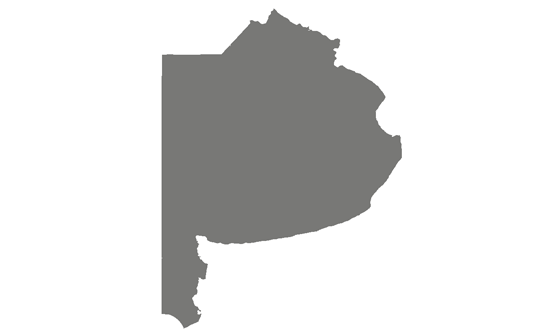
Fuerza Patria - the front uniting Peronism, the largest and most entrenched opposition force to Milei's government - scored 47% of the total vote across Buenos Aires province, while Milei's La Libertad Avanza fell behind with 33%. The opposition secured victories in 99 out of the province's 135 municipalities, cementing its dominance in the territory.
Eight million voters in the Buenos Aires province, the country's biggest electoral district and home to around 40% of the national electorate, turned out to the polls on Sunday in what was widely seen as a decisive election to test the radical politics of Argentina's first libertarian president.
"This will lead to a deep self-criticism," said Milei Sunday night, addressing his supporters in the party's headquarters. However, he warned that the results would not alter the path of his policies, on which he said they would "double down."
And as news of the crypto dollar - the only active currency indicator available ahead of Monday's market opening - skyrocketed from 1,380 Argentine pesos to 1,471, Milei insisted his administration would keep on "defending the fiscal balance tooth and nail."
The province of Buenos Aires has long been a difficult battleground for non-Peronist governments, but the results came as a surprise. They were seen as a warning sign for the upcoming national midterms, where Milei seeks to win more seats in the national congress to pass sweeping reforms in labor, pensions and other areas.
For international observers, the election results raised concerns about Argentina's governability. The International Monetary Fund, which has a $44 billion program with Buenos Aires, is monitoring Milei's ability to sustain fiscal consolidation while keeping social tensions at bay. Analysts noted that the political blow in Buenos Aires province could complicate Milei's negotiations with creditors and foreign investors, who had cautiously welcomed his austerity agenda.
Hugo Yasky, a sitting Buenos Aires province lawmaker running for a seat in the national Congress next month, said he believed results from last night signaled broader trouble for Milei's project as a whole, including both the executive branch and Congress.
"This weakens the capacity of the Milei operations at a national level," Yasky said. "We're starting an era where the chainsaw policies are losing their power." Milei often wielded a chainsaw campaigning, promising to slash spending.
As Milei's main opponents celebrated, media reported that Morgan Stanley backed down early Monday from its previously "favorable" outlook on the Argentine financial market in a report to clients. Shortly after 10 a.m., local bonds and assets plummeted by significant margins, with sovereign bonds in dollars dropping by more than 9% and American depositary receipts from Argentine companies losing up to 21% of their value on Wall Street.
Global markets, which had initially treated Milei's shock therapy with cautious optimism, reacted swiftly. However, on Sunday night, Luis Caputo, the country's economy minister, posted on X that his economic policy would not change.
Since he took office in 2023, Milei has slashed the public sector by minimizing public spending and decreasing the outreach of the state to a minimum. He entirely halted public works at a national level; froze budgets for public universities, hospitals and education; and vetoed pension increases, which currently sit at under $400 a month, arguing any rise could jeopardize fiscal balance.
He has promised to boost international investment and enhance the private sector. While he managed to curb runaway inflation that was battering Argentines at the end of 2023, when he was elected, many fear his policies have disproportionately hurt the most vulnerable, including the poorest and the elderly.
"There's a margin of maneuvering left," said Gustavo Cordoba, a political consultant. "But I don't know if the government has the humility of reading what happened, what the voters from Buenos Aires said."
The result was also read as a reaction to recent political scandals involving top officials. Some of the president's closest aides were in the spotlight in recent weeks after leaked audio - attributed to a former public official who headed the disability agency - contained accusations that Karina Milei, the leader's sister and secretary of the presidency, took a cut from every medical contract awarded by the agency.
The governor of Buenos Aires province, Axel Kicillof, said Milei's policies were hitting a limit. "Polls said 'you can't halt public works, you can't defund health, education, universities, science, culture in Argentina,'" he declared before the hundreds gathered outside his front's headquarters Sunday night to celebrate the Peronist victory.
Kicillof is one of Milei's main political antagonists and one of the names already circulating as a possible competitor in the 2027 presidential elections. Born and bred in Kirchnerismo, the party that ruled Argentina four times in the last 25 years, he is seen as a natural successor of former President Cristina Kirchner, who is serving a 12-year sentence under house arrest for a corruption scandal. However, Kicillof has also been involved in stark infighting with Kirchner and her loyalists. The election results could serve as a boost for him to consolidate political autonomy ahead of the presidential elections.
During the campaign, Milei and his candidates - under the leadership of Karina Milei, who managed the political campaign and operation - had pledged to put "the final nail in the coffin of Kirchnerism" as a political slogan. They also rallied under the "Kirchnerismo never again" motto, mocking the "never again" demand of victims of state terrorism after the 1976 military dictatorship ended in 1983.
"They don't know what else to do to humiliate us," said Estela de Carlotto, 94, head of Abuelas de Plaza de Mayo. She and a group of mothers of young activists kidnapped during the 1970s founded the organization to search for their children. Since then, over 130 people born in captivity have had their identities restored.
Cristina Kirchner, leader of the Peronist Party, posted on X from her house arrest: "Banalizing the 'never again' slogan, which represents the darkest and most tragic era of our history, it comes at a cost."
As markets react and citizens await announcements on economic policy, Cordoba said that the opposition is already preparing for October's national congressional elections.
"Last night's results empower the whole opposition, enlarging an 'anti-Milei-ist' tendency we had started to notice a few months ago," Cordoba said.
Source: Courthouse News Service